Reference
In dialysis centres, water treatment is one of the biggest consumers of resources – and at the same time often a black box. Electricity and water consumption, operating times, cleaning cycles: much remains unclear because data is missing. Without data there is no transparency, and without transparency there is no optimisation. This is exactly where our GreenTec Performance System (GPS) comes in.
Dialysis centres consume up to 400 litres of drinking water and up to 12 kWh of electricity per treatment. Some centres in Germany still exceed this values. A large proportion of this is consumption comes from water treatment – a process that is rarely monitored in detail.
The result: unnecessarily high water and energy usage, and missed opportunities to reduce operating costs.
Our GPS software changes that. It makes visible what was previously hidden and thus lays the foundation for more sustainable resource management. The system is one of two pillars of our Smart Dialysis® concept, our approach to make dialysis future-proof.
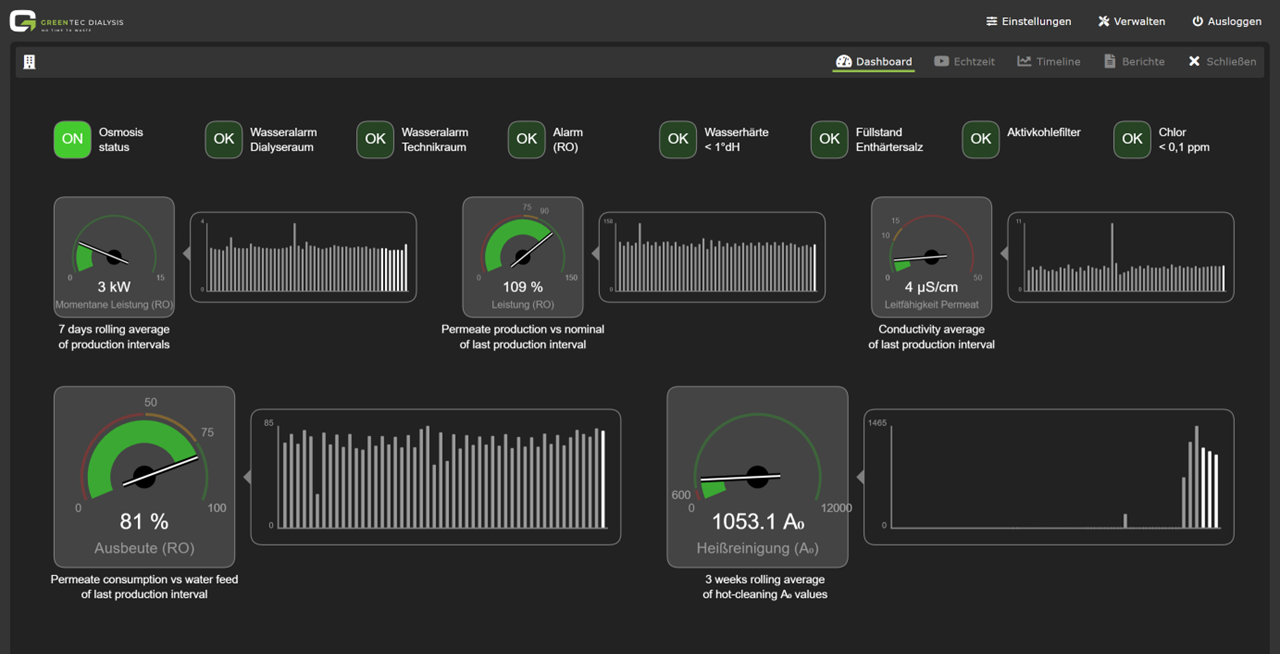
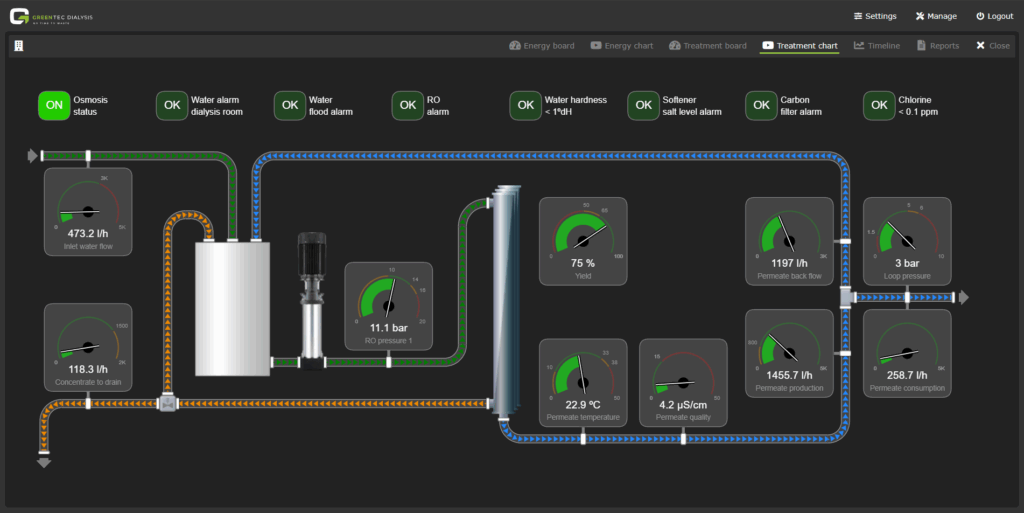
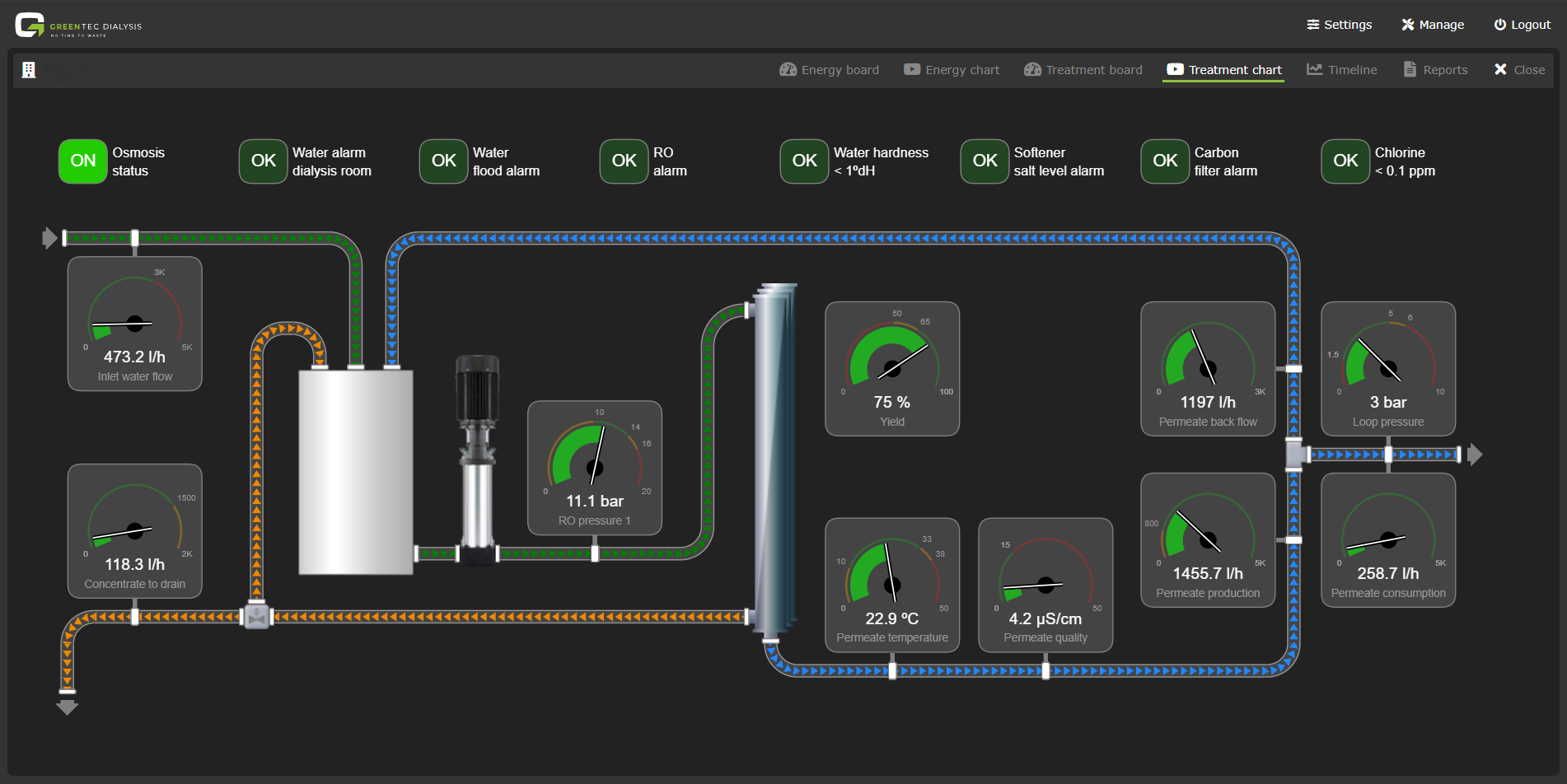
Screen of the Smart Water GPS module:
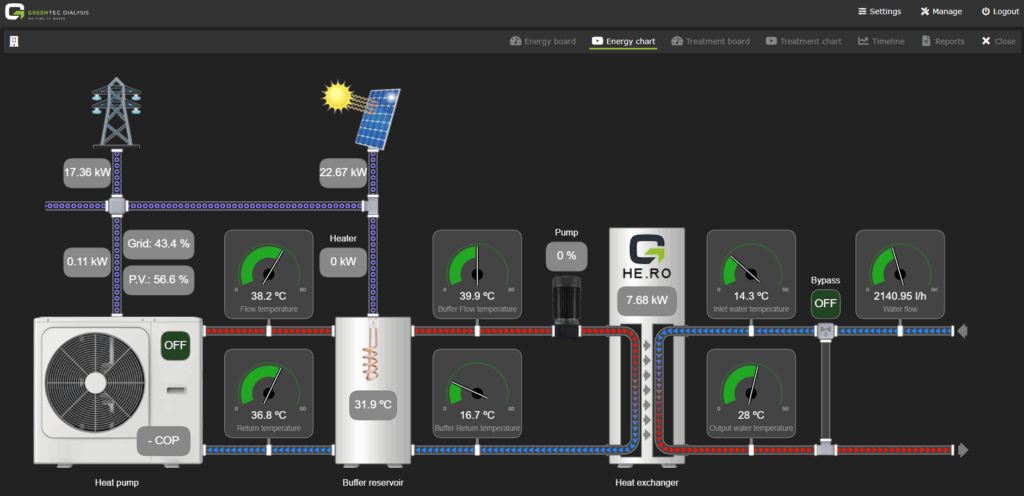
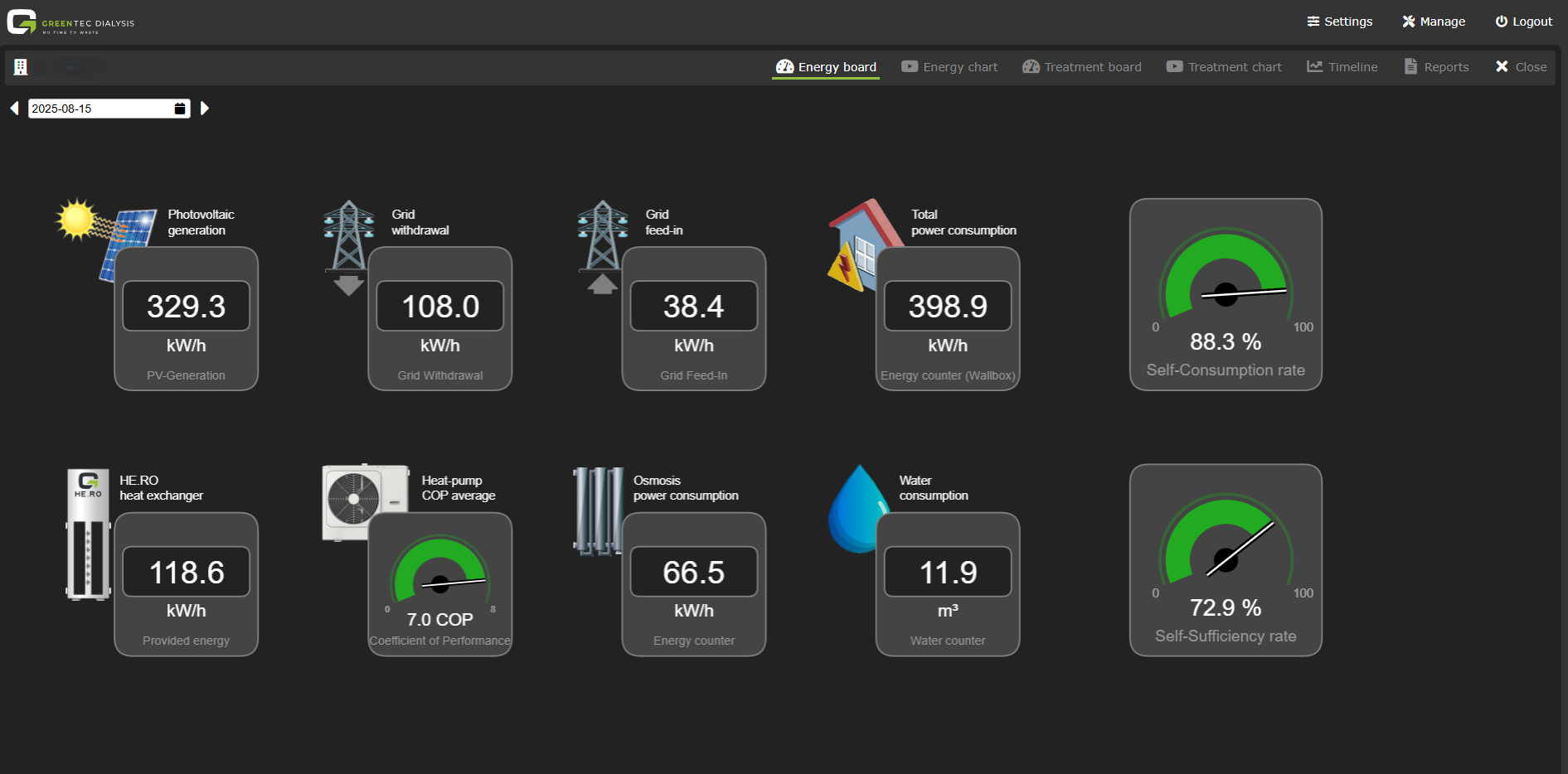
Screen of the Smart Energy GPS module:
The GreenTec Performance System, with its two modules Smart Water and Smart Energy, digitally connects the systems of the Cross-Sector Integration and water treatment digitally.
How GPS works:
To control resource consumption, dialysis centers need data. Our GPS software collects and visualises all relevant consumption data in real time; from reverse osmosis and hot cleaning to energy generation via PV systems. The data is accessible at any time and forms the basis for all further steps.
To unlock value, we analyze the data. This helps identify inefficient processes and anomalies, such as:
The GPS data provides answers, and shows where optimisation is possible.
Based on the analysis, we can propose specific measures to optimise resource consumption.
Examples include
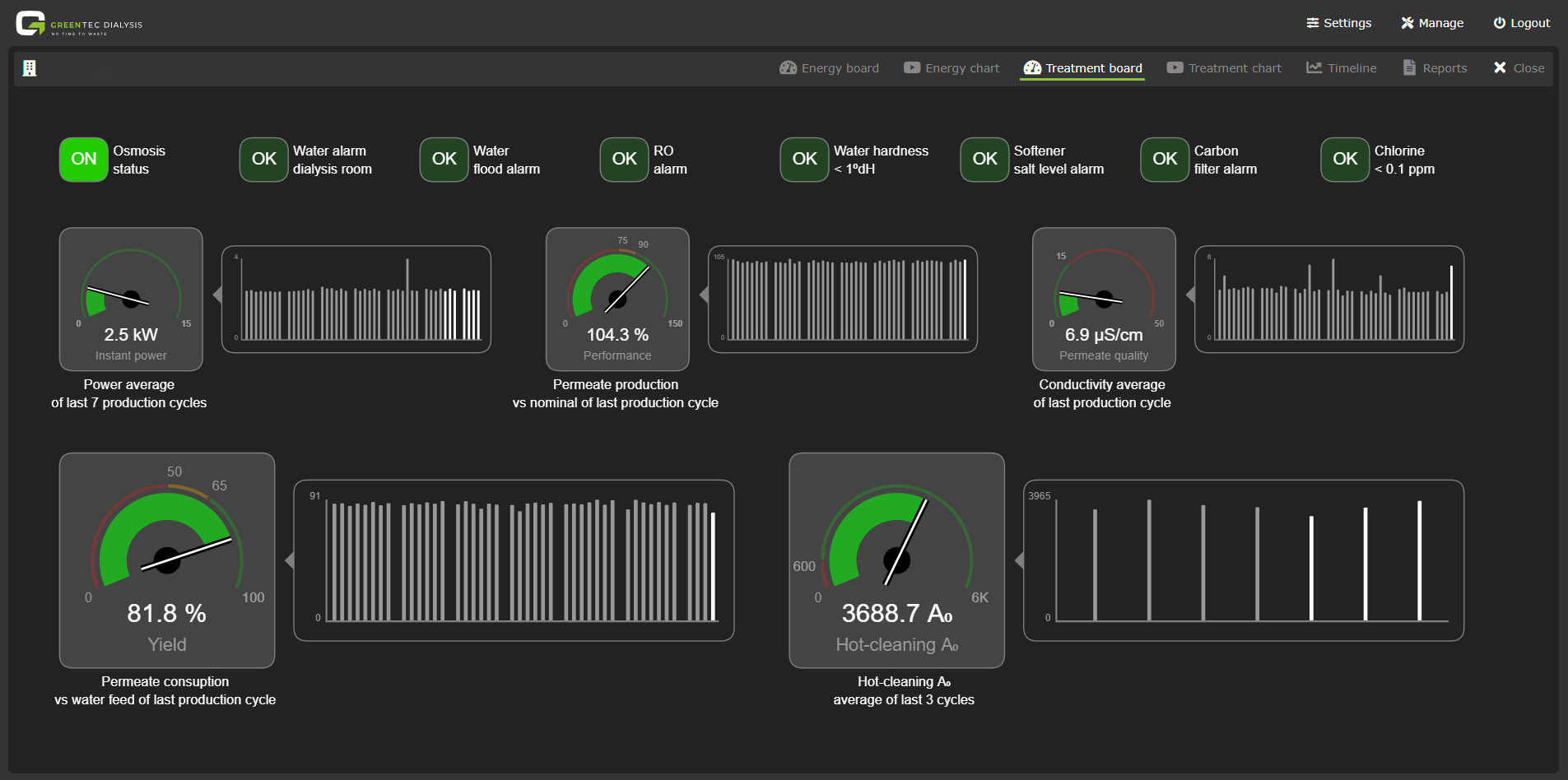
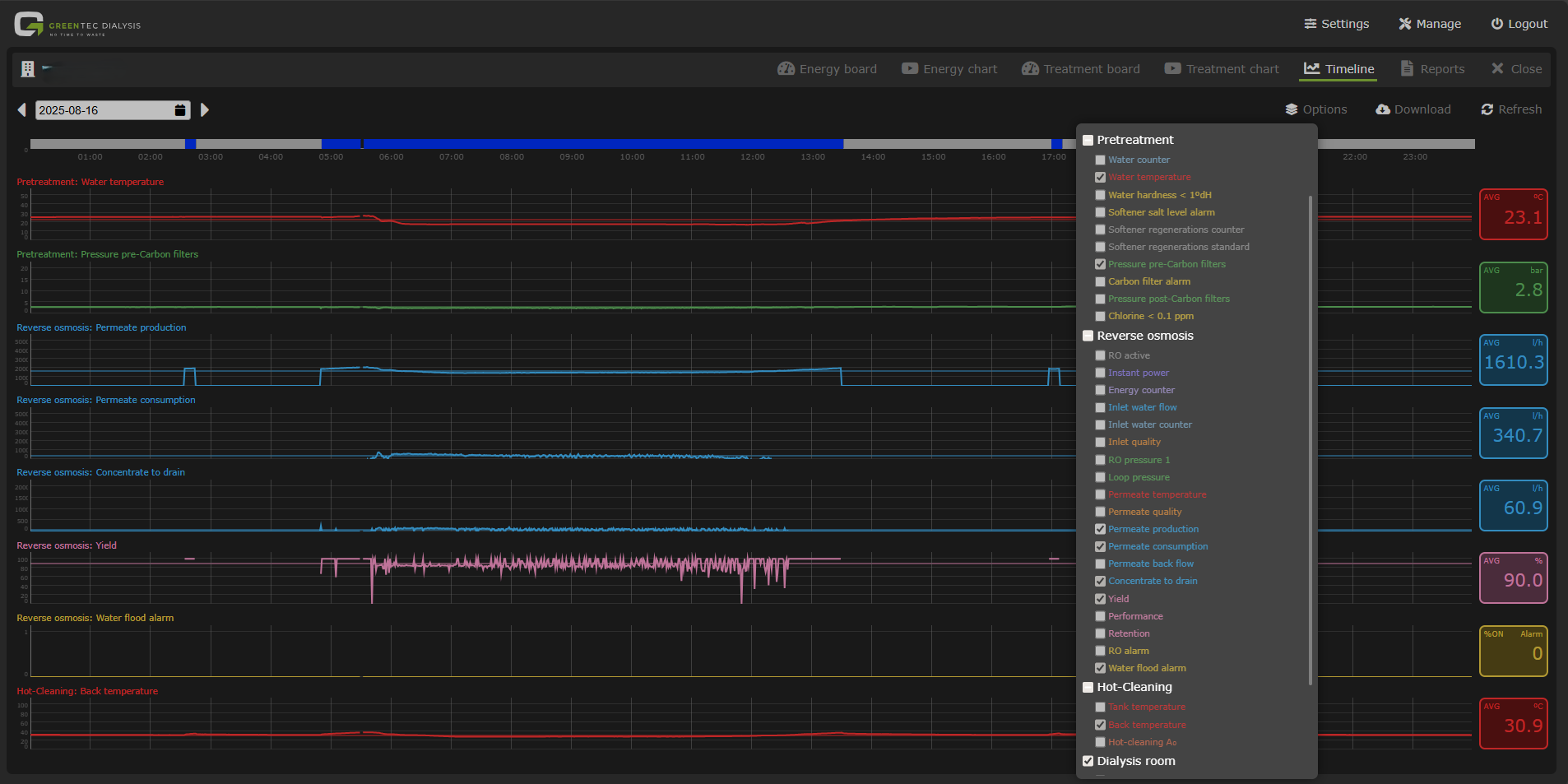
GPS is not just a tool for collecting data. It is a digital assistant for operations. It automates daily logs in accordance with ISO 23500, reducing staff workload. It monitors hygiene parameters such as A0 values and enables remote monitoring of multiple sites. This allows technical teams to work more efficiently and minimise the risk of downtime.
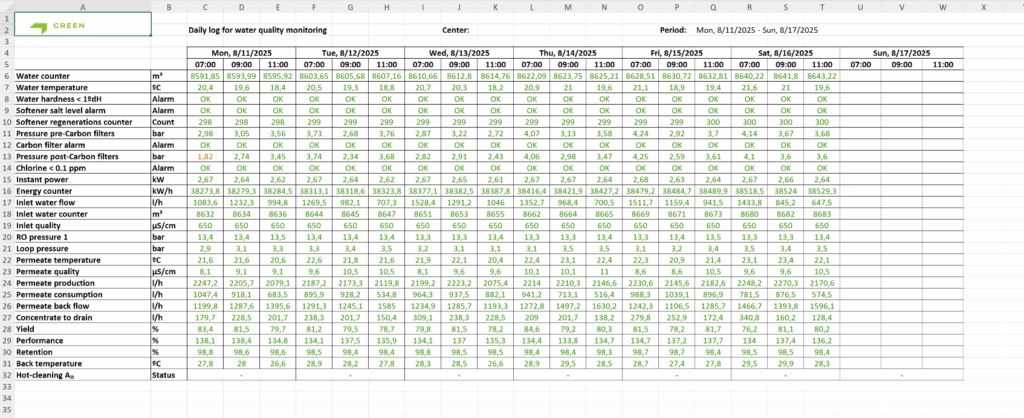 Digital daily log
Our GPS is eligible for BAFA subsidies in Germany.
This makes it not only an efficiency tool, but also a strategic building block for the sustainable transformation of dialysis centers.
If you want to save resources, reduce CO₂, optimise operating costs, and at the same time maintain treatment quality, you need good data. Our GPS software provides the basis for smooth operation, so that dialysis teams can focus on their core tasks.


